Wall finishes
Wallpaper or Paint? A Practical Guide for Humid Sri Lankan Homes
Use wallpaper where the wall is sound and dry, the exact product suits the room, and you can follow its care requirements. Choose paint when a simpler background or easier future colour changes matter more. Neither finish should hide unresolved dampness. For a humid Sri Lankan home, the useful comparison is the complete wall system, preparation and maintenance—not just a beautiful pattern versus a paint tin. This guide helps you make that decision before ordering materials.
Compare the decision, not just the appearance
| Choice | Useful when | Check first |
|---|---|---|
| Painted wall | A quiet background or future colour changes matter | Substrate repair, coating system and cleaning |
| Pasted wallpaper | Pattern or texture is central to the room | Product suitability, preparation and adhesive |
| Peel-and-stick covering | A specific approved product fits the surface | Humidity, paint compatibility and removal limits |
| Postpone the finish | Moisture or wall defects remain unexplained | Professional assessment and repairs before covering |
Why textured wallpaper is worth discussing, without copying a trend
Houzz's emerging summer trends report for 2026 identifies increased U.S. searches for textured wallpaper, including linen and seagrass looks. That supports discussing texture as a current design interest; it does not establish Sri Lankan search demand, local stock or the performance of a particular product. A woven appearance can be printed, embossed or made from natural fibres, and those constructions may require different care.
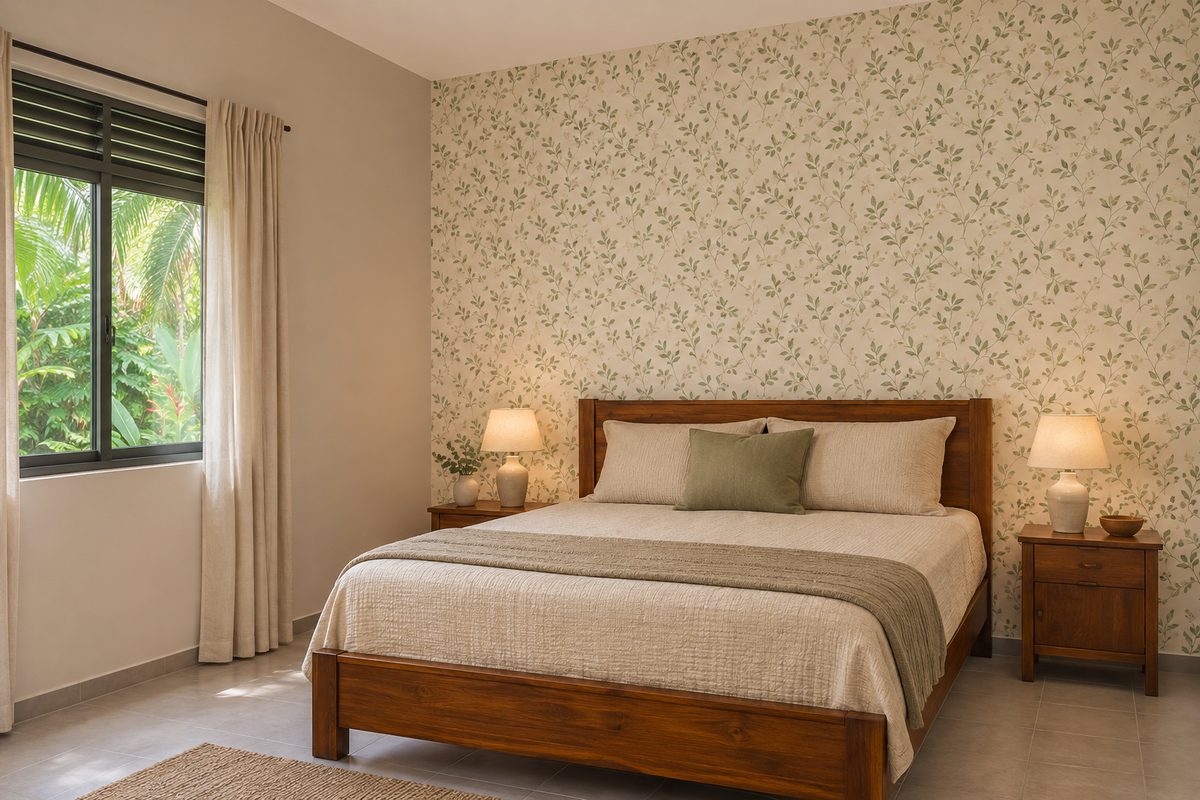
Begin with the effect you want. A quiet texture behind a bed can add depth without filling the room with objects. A strong repeat can become the room's main visual feature. Paint may be more appropriate when you want a calm background or expect frequent colour changes. Keep existing solid timber furniture, flooring and curtains in the decision. A finish should help the whole room work, rather than compete with every surface around it.
Check the wall before buying the finish
Look for recurring staining, peeling paint, salts, damp smells, cracks or a history of rain entering the wall. These observations are reasons for investigation, not a diagnosis from a photograph. Ask a competent building professional to identify and resolve persistent moisture or structural concerns before a decorator covers the surface. Neither wallpaper nor ordinary decorative paint is a repair for a leaking wall.
Discuss the substrate, soundness and preparation with the installer. York's installation guidance calls for a clean, dry, sound, suitably prepared surface, and distinguishes the preparation needed for different products. Do not assume that thick paper or a textured pattern will bridge loose paint, unstable plaster or active cracks. A wall can look smooth from the doorway while still needing substantial preparation. Agree who inspects it, what work is included, and who approves readiness before material is cut.
Match the exact product to the room
Traditional pasted paper, nonwoven products, vinyl-coated coverings, solid vinyl and self-adhesive products are not interchangeable specifications. Ask for the actual product name, composition, care symbol and installation sheet. Paste-the-wall describes an installation method; it does not by itself mean waterproof, mould-proof or washable. Equally, peel-and-stick does not guarantee harmless removal from every painted surface.
Use a dry bedroom or living-room wall as the simplest starting point. For a kitchen or bathroom, obtain written suitability for the actual position and exposure. Graham & Brown's bathroom advice distinguishes humid rooms from direct splash zones. It recommends keeping wallpaper away from direct water. A kitchen wall beside a hob also needs the appliance manufacturer's clearances and an appropriate surface specification; a decorative covering should not be treated as a heat shield. Coordinate any electrical or plumbing changes through qualified professionals, with the finish installed only after those details are resolved.
Understand humidity, ventilation and the limits of a label
Think about the room in rainy weather, not only during a sunny viewing. Does laundry dry there? Are windows exposed to wind-driven rain? Is the wall against a frequently wet room? Good ventilation matters, but opening a window does not prove the wall or adhesive is suitable. Ask how the selected product behaves under the room's actual conditions and what environmental requirements apply during installation and use.
York cautions that its peel-and-stick products can be more prone to bubbling and seam separation in high-humidity areas. That is a useful product-specific warning, not proof that every self-adhesive covering will fail in Sri Lanka. Request a small compatibility trial where the manufacturer permits it and follow the actual instructions for new paint, primers and curing. Avoid inventing a universal waiting period. If the supplier cannot explain suitability or the moisture problem remains unresolved, postpone the decorative work rather than experimenting over the whole wall.
Choose the extent and pattern from real samples
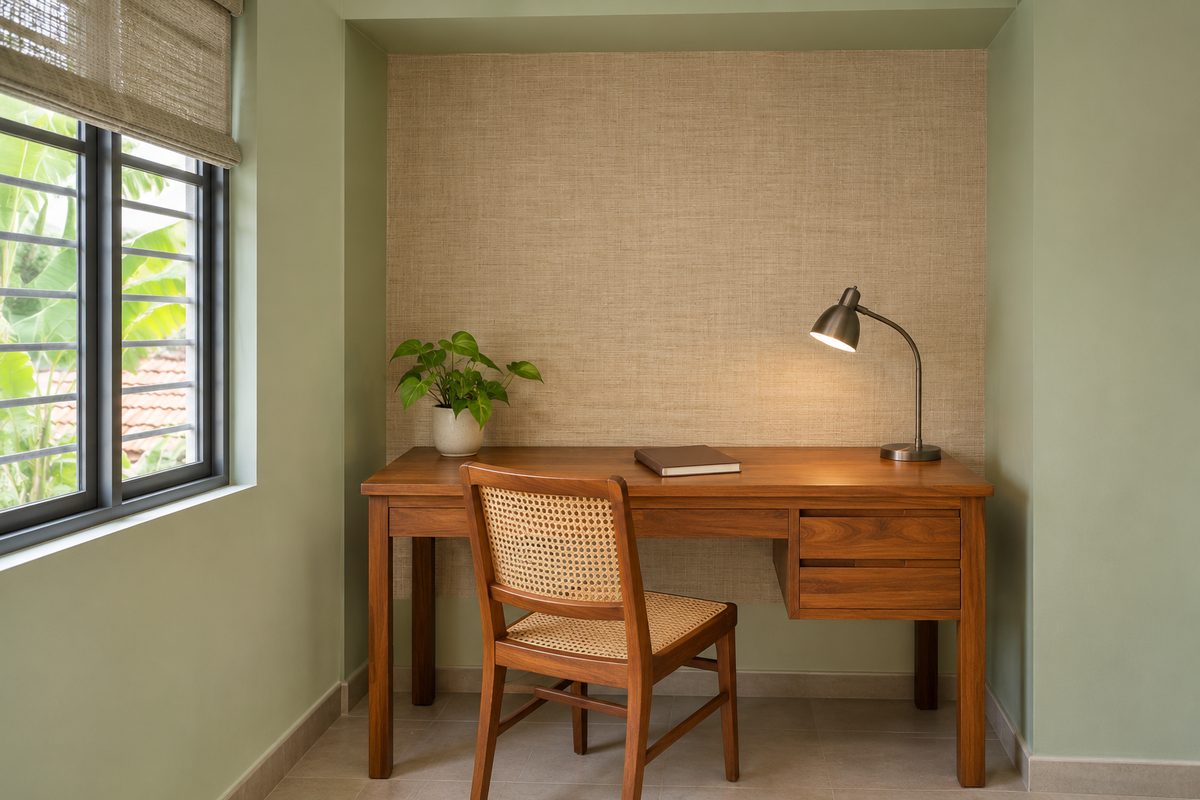
Compare a feature wall, a limited alcove and a whole-room treatment before choosing the roll. A wall behind a bed may give the desired effect with fewer interruptions than a wall full of doors, sockets and shelves. Check where the pattern would stop: at a clean corner, an existing trim or another deliberately designed boundary. A random strip ending halfway across a broad wall can look unfinished and complicate future repairs.
View a physical sample in the room during daylight and under the lamps used at night. Place it beside the actual timber, bedding and curtain fabric. Assess pattern scale from the normal viewing distance, not only close up. Large motifs may be cut awkwardly behind furniture; a small repeat can appear busier over a whole wall than on a swatch. Keep one main decorative direction and let neighbouring surfaces support it. An AI concept helps discuss the extent, but it cannot prove colour accuracy, texture or product performance.
Plan cleaning and future changes before installation
Ask what routine care is allowed and what the stated washability actually permits. Wipeable is not permission to scrub, soak, steam or use an arbitrary cleaner. Natural-fibre wallcoverings can have intentional tonal variation and visible panel effects; ask for the specific manufacturer's care and appearance expectations before ordering. Do not promise an invisible seam or an exact match from a later purchase.
For paint, request the relevant interior product and finish guidance for the room, including cleaning and touch-up expectations. A suitable paint may be easier to repaint across a complete wall, while repairing wallpaper can depend on the pattern, batch and available spare material. Neither option guarantees an invisible local repair. Keep product references, batch details, the approved sample and any agreed spare material. Choose the finish partly by the change you expect next: another colour, new wiring, a different bedhead or a future rental handover.
Compare the full installed quotation
A wallpaper roll price is not a complete installed cost. Ask the installer to measure the wall, account for pattern matching and trimming, and state the quantity and waste assumptions. Roll widths, lengths and repeats vary, so dividing wall area by a generic roll area can understate the order. Compare the same coverage and product specification between quotations, with a clear policy for unopened extras and defects found before installation.
Request separate descriptions for old covering removal, substrate repairs, suitable primer or lining where required, adhesive, installation, access equipment, protection and making-good. State whether moving furniture, removing and refitting fixtures, electrical work and disposal are included. For a paint alternative, include preparation and the complete specified coating system. Complex corners, high walls, delicate materials and extensive repairs can change labour substantially. No LKR rate is supplied here: a dated local quotation and a defined wall condition are needed for a meaningful comparison.
Make the decision in a practical order
First resolve the wall's condition and exposure. Next decide the coverage, shortlist suitable products, view samples and confirm care. Then obtain an installer-measured quantity and compare complete quotations. Approve the layout and material before ordering, check delivered rolls before cutting, and agree a staged inspection rather than waiting until every wall is covered. Keep the manufacturer's instructions with the job record.
Common mistakes are covering an unexplained damp patch, buying rolls before checking the repeat, treating self-adhesive material as automatically rental-safe and choosing a bold motif without viewing it beside existing furniture. If the room needs easy future changes, a coordinated painted wall may be the better choice. BJ Atelier can help compare the decorative direction, coverage and cost-plan scope through online consultations from Chilaw, Sri Lanka. Send wall photos, room dimensions, existing finishes and your budget range so the advice starts with the real room.
Your next-step checklist
- Investigate recurring dampness or wall defects before decorating.
- Choose the area to cover and where the pattern will stop.
- Obtain the exact product sheet and room-suitability confirmation.
- View a real sample beside existing furniture in different light.
- Ask the installer to measure quantities including pattern matching.
- Compare full installed costs, care, spare material and future removal.
Common questions
Can wallpaper cover a damp wall?
It should not conceal an unresolved moisture problem. Identify and repair the source, then have the surface assessed before choosing a decorative finish.
Is all vinyl wallpaper suitable for a bathroom?
No. Confirm the exact product, position, ventilation and exposure in writing. Moisture resistance does not make a decorative wallcovering a shower waterproofing system.
Will peel-and-stick come off without damaging paint?
There is no guarantee for every surface. Follow the selected product instructions, paint compatibility and any permitted trial; agree landlord requirements separately.
Can I order by wall area alone?
Not reliably. Roll dimensions, pattern repeat, matching, openings and trimming affect quantity. Ask the installer for a measured order and waste assumptions.
Which is easier to repair later?
A painted wall may be easier to repaint as a whole, while wallpaper repair depends on matching material and pattern. Neither guarantees an invisible small repair.
Related planning guides
Further reading & sources
Make the idea work for your home.
Share your location, room photos, dimensions and budget range. We can help you choose the appropriate design, drawing or costing service.
Explore design services →Prepared with AI assistance for BJ Atelier. These articles offer general planning guidance. Project-specific dimensions, specifications, professional checks and prices are agreed separately.