Decorating and practical layouts
Choosing Rugs for Sri Lankan Homes: Size, Furniture Fit and Realistic Care
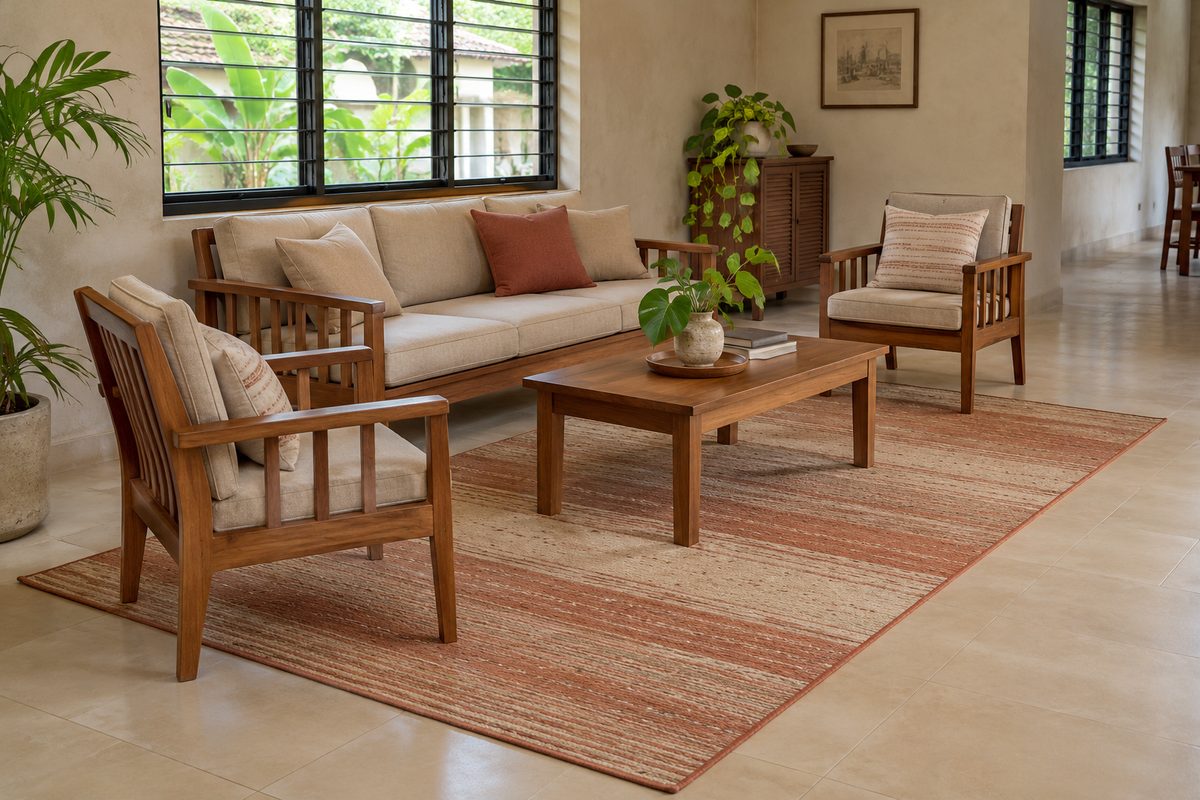
Choose the size around the furniture in use, then check the exact rug construction, backing and care instructions before choosing a pattern. For Sri Lankan homes, plan how the rug will stay clean and dry during humid or rainy periods. A rug that looks right but blocks a door, catches a chair or cannot be cleaned with your available equipment is a poor purchase. This guide helps you compare living-room, dining-room and bedroom options without inventing a universal rug size.
Compare by use and maintenance
| Option | Useful when | Confirm before buying |
|---|---|---|
| Flat or low-pile rug | Chairs move or crumbs need easy inspection | Edge finish, backing and cleaning method |
| Deeper-pile rug | Texture and softness are a priority | Vacuum method, furniture stability and door clearance |
| Removable-cover system | Separate cover cleaning is useful | Machine capacity, drying and pad care |
| Bare floor or small bedside rug | Lifting a large rug would be difficult | Comfort, route safety and floor maintenance |
Start with the room and the cleaning routine
Choose a rug for a particular activity, rather than treating every room alike. A living room needs a comfortable seating group; a dining room needs chairs that move smoothly; a bedroom may need a soft landing beside the bed. Write down who uses the space, whether shoes are worn indoors, and who will lift and clean the rug. Include pets, small children and anyone who finds loose edges difficult to cross.
A rug is optional. If daily spills, wet footwear or difficult drying make it a burden, a well-maintained bare floor can be the better choice. Do not buy a rug just to complete an inspiration picture. Start with one room, identify the problem it should solve, and decide how much maintenance you can realistically manage during a rainy week. There is no single fibre, colour or construction that suits every household.
Measure the furniture arrangement before choosing a shop size
Draw the usable room, including door swings, cupboards, walking routes and furniture that will stay. Measure the actual sofa, chairs and coffee table rather than relying on a room's overall dimensions. For a seating area, compare a rug that supports the furniture group with one that sits only beneath the coffee table. The latter can look disconnected when it leaves the seats scattered around its perimeter. A front-leg arrangement is one possible compromise, provided the furniture remains stable.
Mark the proposed outline on the floor using a removable method that will not damage the finish. Move through the room and open every nearby door. Check both the visible outline and the thickness of the complete rug-and-pad assembly. Shop sizes are convenient starting points, not a reason to obstruct a route. Photograph the trial with the existing furniture in position, then take the dimensions and photographs when comparing products.
Test dining chairs and bedroom storage in use
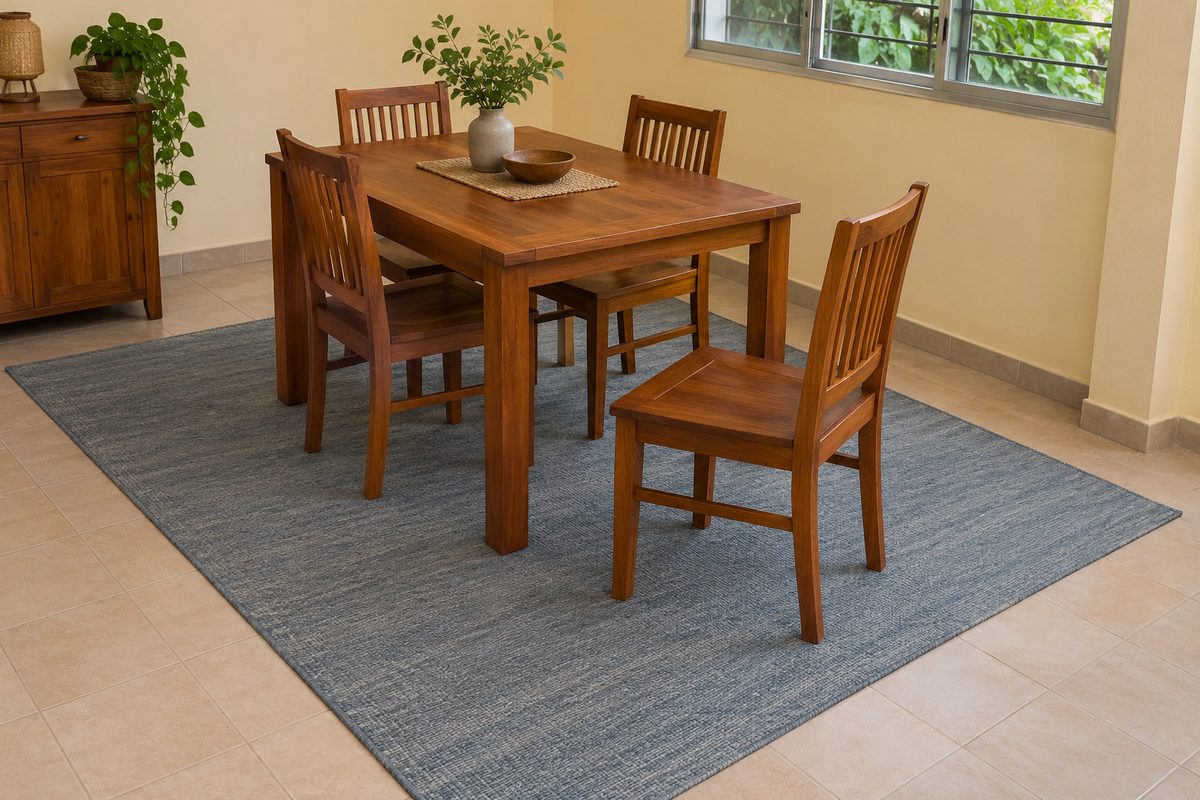
For dining, the chair movement matters more than the table alone. Pull out every chair far enough for its usual user to sit and stand, including chairs at the ends. Check that the chair feet remain properly supported rather than dropping over the rug edge. Repeat the test with the table extended if it is normally extended for visitors. Leave useful circulation beyond the chairs; a bigger rug cannot create floor area that the room does not have.
IKEA's dining guidance recommends allowing for the pulled-out chairs and testing the outline before purchase. Its rug guide also explains why a flat weave can be easier to move chairs over than long pile. These are starting principles: your actual table, chair feet and room still need testing. In a bedroom, open under-bed drawers fully and walk beside the bed. A small bedside rug is a separate option when moving a heavy bed for cleaning would be impractical.
Compare the surface, backing and edge together
Pile is the raised surface of a rug. A flatter or lower-pile construction can make crumbs easier to see and chair movement simpler, while deeper pile gives a different tactile feel and asks more of the cleaning routine. Test a sample with the vacuum and furniture feet you actually use if the seller permits. Look at the edge binding, loose loops and fringes, especially where shoes, pets or moving chairs may catch them. A smooth photograph cannot reveal these details.
Read the complete composition, including the backing. Wool, cotton, jute and synthetic fibres can all occur in very different constructions; the fibre name alone does not establish washability, indoor/outdoor suitability or stain performance. Ask how the exact product should be cleaned and dried. A natural appearance is a style decision, not a performance certificate. View a sample beside your timber furniture, tile and curtains in daylight and evening light before ordering a large area of colour.
Check rug pads, door clearance and the floor finish
A compatible pad can help the rug lie securely, but its material and thickness need to suit both the rug and the floor. Ask the flooring supplier and rug seller about the actual finish rather than choosing an unidentified backing because it feels grippy. Record any restrictions about rubber, adhesives, heat, staining or newly finished floors. A rug should not conceal loose flooring or an unresolved moisture problem.
Check the edges after installation and during normal use. Stop using a rug that slides, bunches or curls until the cause is resolved. Avoid positioning an edge at a difficult doorway or across a route used by someone with limited mobility. Do not assume that furniture weight makes every part secure. For a household using a walking aid or wheelchair, ask an appropriate professional to assess the route and surface; removing the rug may be the simplest practical decision.
Treat washable as a specific instruction, not a promise
Ask what can be washed: the entire rug, a removable cover, or neither. Check the product label, required equipment and drying method before purchase. A large item may exceed the capacity of the household machine even when the product is described as machine washable. Also consider who will lift the wet material, where it can dry and whether local professional cleaning is available. Easy-care wording should lead to written instructions, not assumptions.
Ruggable's current care guide separates its removable-cover systems, one-piece washable rugs and wool products that are not machine washable. It also warns that some large sizes need commercial machines. This illustrates why instructions must match the exact product; it is not an endorsement of local availability or advice for every rug. Keep the care label, product identity and seller's contact. Avoid transferring another brand's bleach, soaking, steam or drying instructions to an unidentified rug.
Plan for spills, humidity and routine inspection
In a humid or rainy period, plan drying before wet cleaning. Follow the product's instructions and do not return a damp rug or pad to the floor. Check beneath it periodically, particularly after a spill or a period with windows open to rain. If moisture or an unusual smell persists, lift the rug when safe to do so and investigate the source rather than covering it with fragrance. Resolve leaks and wet-floor conditions before putting the rug back.
Set a manageable routine for the exact construction: remove loose dirt using the approved method, deal with spills according to the label, and check hidden areas and edges. Test permitted cleaning products in an inconspicuous area where the manufacturer advises this. Confirm how the pad is cleaned separately. Do not promise that a rug will solve room acoustics, allergies or indoor humidity; those need wider assessment. A practical rug supports daily life without hiding a maintenance problem.
Compare the complete cost and approve a small shortlist
Compare the rug price together with the pad, delivery, any stair handling, installation assistance and likely cleaning arrangements. Custom sizes, handmade construction, edge finishing and imported replacement parts can change the total. Ask whether samples, returns, colour variations, size tolerances and cleaning damage are covered by the seller's terms. Get a written description of the product rather than comparing two photographs with the same colour name. This guide gives no LKR price because a dated local quotation for the selected specification is needed.
Shortlist only options that pass the furniture-fit and care checks. Common mistakes are choosing the pattern first, measuring only the dining tabletop, forgetting door clearance and assuming natural fibre means washable. Approve the room outline, sample and care plan together. BJ Atelier can help coordinate a rug with your existing furniture and room layout through an online consultation from Chilaw, Sri Lanka. Send room photographs, furniture dimensions, everyday use and a budget range so the discussion starts with your actual home.
Your next-step checklist
- Measure the furniture group and mark the proposed rug outline.
- Pull out dining chairs and open doors and storage fully.
- Read the composition, backing and exact care instructions.
- Confirm that the pad suits the rug and floor finish.
- Plan lifting, cleaning and complete drying before purchase.
- Compare the total cost, return terms and written product identity.
Common questions
Must every living-room furniture leg sit on the rug?
No. A front-leg arrangement can work if the furniture is stable and the rug connects the group. Judge the actual room rather than treating one placement rule as compulsory.
Can a dining rug stop at the table edge?
That often leaves moving chairs crossing its edge. Test the full sitting and standing movement of every chair before choosing the outline.
Does washable mean it fits my home washing machine?
No. Confirm the exact product instructions and machine capacity. Some large washable products require commercial equipment.
Is jute always the right choice for a tropical home?
No fibre name guarantees suitability. Ask about the actual construction, moisture exposure, cleaning and drying method for the intended room.
Can I put the rug back when it feels almost dry?
Follow the product instructions and return it only when fully dry, with the pad and floor also dry. Investigate persistent moisture before covering the area.
Related planning guides
Further reading & sources
Make the idea work for your home.
Share your location, room photos, dimensions and budget range. We can help you choose the appropriate design, drawing or costing service.
Explore design services →Prepared with AI assistance for BJ Atelier. These articles offer general planning guidance. Project-specific dimensions, specifications, professional checks and prices are agreed separately.