Design concepts
A warm dining room with timber and cane: keep the layout useful
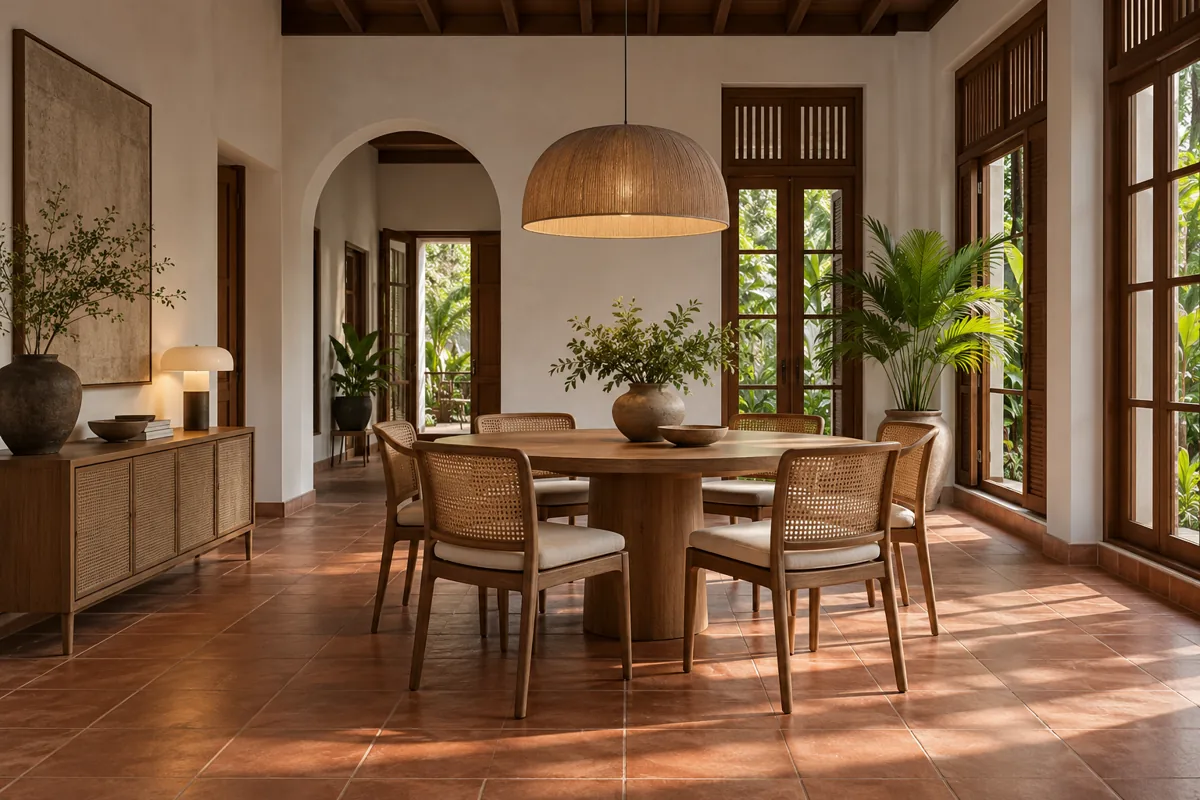
A dining room should work when the chairs are occupied, not only when they are pushed neatly under the table. Start with the table you need, the number of everyday users and the route to the kitchen. Timber and cane can add warmth, but their proportions and maintenance matter more than matching every piece.
Check the table with people seated
Measure the complete table and chair dimensions, including arms and the position of table legs. Some chairs cannot tuck under an apron or fit between the legs even when the tabletop appears large enough. Pull chairs out and test the route behind them.
If you entertain occasionally, compare an extendable option with a table sized for daily use. Include the storage and handling of extension leaves in the decision. Buying for the largest possible gathering can leave the room uncomfortable for the rest of the year.
Coordinate retained furniture
Keep a sound dining set if its scale works. Introduce a sideboard only when there is useful storage to justify its depth. Repeat the table timber in a small detail or choose a deliberate, compatible contrast rather than attempting an almost-match from a screen.
Cane-backed chairs can lighten the visual weight of a solid table. Inspect the weave, frame and repair options before buying. Test the seat for the length of time you normally sit, not just for a quick photograph.
Align light with the final layout
Locate a pendant from the final table position, not automatically from the centre of the ceiling. Consider headroom, the view across the table and access for cleaning. Confirm the electrical position with the installer before finishes are complete. Keep the tabletop usable: a small centrepiece can be easier to move than several permanent decorative objects.
Your next-step checklist
- Test chairs under the table.
- Check the route with chairs pulled out.
- Compare real timber and fabric samples.
- Set the light position after the table layout.
Common questions
Must the sideboard match the dining table?
No. A compatible colour, scale and finish can be more convincing than a near-match.
Is a round table always better for a small room?
No. Compare the actual chair positions and circulation for the shape of your room.
Make the idea work for your home.
Share your location, room photos, dimensions and budget range. We can help you choose the appropriate design, drawing or costing service.
Explore design services →Prepared with AI assistance for BJ Atelier. These articles offer general planning guidance. Project-specific dimensions, specifications, professional checks and prices are agreed separately.