Kitchen materials
Kitchen Worktops in Sri Lanka: Granite, Quartz, Porcelain or Laminate?
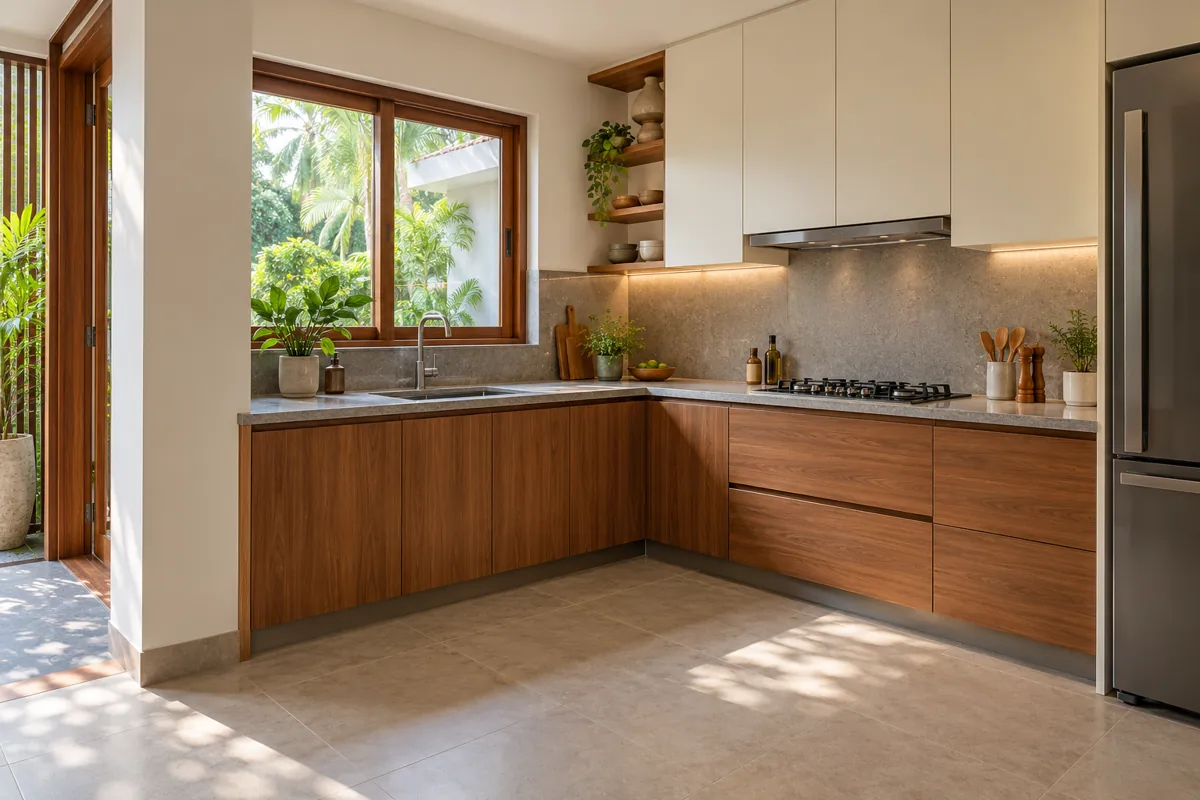
Choose a kitchen worktop by matching the exact surface product, installation details and cleaning routine to your household. There is no single material that wins every comparison. Granite brings natural variation; engineered quartz offers coordinated patterns; porcelain can create a crisp slab appearance; and laminate may suit a carefully detailed cabinet system. The right choice depends on how you cook, where water collects, the fabricator's ability and the complete installed quotation. Start with those decisions before choosing a fashionable colour.
A quick shortlist comparison
| Material | What to examine | Question before approval |
|---|---|---|
| Granite | Actual slab, joints and stone-specific care | Does this stone need a treatment, and what does it protect against? |
| Engineered quartz | Exact product and care instructions | What heat protection and warranty conditions apply? |
| Porcelain | Edges, cutouts and fabricator experience | How are exposed edges and supports detailed? |
| Laminate | Core, joints and wet-area protection | Which sink arrangement is approved for the full assembly? |
Start with the way your kitchen is actually used
Write a short worktop brief before visiting suppliers. Note where you wash vegetables, handle wet dishes, prepare food, park appliances and serve meals. Include who normally cleans the kitchen and whether another person cooks at the same time. A household that cooks full meals daily needs a different discussion from a lightly used apartment kitchen.
Mark the sink, hob, fridge and preparation areas on the cabinet plan. Photograph the existing supports if this is a replacement project. Changing the top alone may expose cabinet damage or alter the position of the sink and taps. Decide who will assess these conditions before accepting a worktop-only price.
Use current surface trends as inspiration, then test them locally
Houzz's March 2026 reporting from the KBIS trade show highlighted warm neutral surfaces, quartzite-inspired patterns, blue tones and textured finishes. This is overseas product-design reporting, not evidence of Sri Lankan sales or local stock. A photograph can suggest a palette; it cannot establish a material's suitability.
For a warm kitchen direction, try a restrained cream or sand-coloured top alongside timber fronts. If you prefer a strong vein, keep nearby finishes quieter and inspect a large sample. Ask the local supplier which exact product produces that look, whether the slab is available, and what its written care instructions require. A similar colour does not mean identical performance.
Granite: choose the actual stone, not only the name
Granite is natural stone, so inspect the actual slab and agree which visible areas will be used. The Natural Stone Institute advises identifying the stone and obtaining a stone-specific cleaning and sealing recommendation. Some stones need an impregnating treatment; sealing improves stain resistance rather than making a surface stain-proof. Protect the top with chopping boards and trivets.
Ask the fabricator to show the proposed joint positions and the finished edge on a comparable piece. Keep a photograph of the selected slab with your approval. A tiny sample is useful for colour coordination but cannot show every mark or variation across the finished kitchen.
Engineered quartz: coordinated appearance still needs care
Do not confuse engineered quartz with natural quartzite. Request the exact brand, collection and care sheet rather than accepting the generic word quartz. For Caesarstone quartz and mineral surfaces, the manufacturer advises protection from hot cookware, chopping directly on the top and unsuitable cleaning chemicals. These instructions must not be treated as the specification for every other brand.
A regular or subtle pattern can help when you want the cabinetry to remain the visual focus. Compare a sample beside the cupboard finish and backsplash. Ask what happens if a corner chips and who deals with a warranty claim. A material guarantee and a fabricator's installation guarantee may cover different issues.
Porcelain: examine edges and fabrication as well as the face
Ask for the exact slab specification and an example of its finished edge. Caesarstone's porcelain guidance distinguishes its heat behaviour from quartz and warns against hard impacts at exposed edges. It also gives precautions for appliances that emit heat continuously. Use the instructions for the product you actually buy; a porcelain label alone is not enough.
Study the junction between the surface pattern and the edge. Confirm whether the pattern continues through the material or is primarily on the face, and how the installer will finish cutouts. A good decision includes a fabricator experienced with that slab and a clear explanation of support requirements.
Laminate: the construction underneath matters
Laminate is a surface within a complete worktop assembly. Ask what board or core supports it, how front edges and exposed ends are finished, and how sink and tap openings are protected. Formica's care guidance specifically cautions against flooding laminate around seams because water can reach and swell the substrate.
Ask to see the underside and a finished corner, not just the decorative sheet. Confirm which sink installation the supplier approves for that assembly. This can be a useful choice when its construction and wet-area details suit the project, but it should not be specified by appearance alone.
Resolve the sink, hob and joints before cutting
Give the fabricator the final sink and hob information, including the manufacturer's cutout requirements. Avoid approving a top using an approximate appliance size from an online photograph. Agree whether the sink is top-mounted, undermounted or another approved arrangement, and who supplies its support and seals.
Ask for a drawing showing slab joints, exposed edges, tap holes and any unsupported projections. Support spacing, cutout clearances and fixing details need the fabricator's product-specific design; they are not universal numbers. Confirm access for carrying the pieces into the room. Stone cutting and heavy slab handling belong with competent professionals using appropriate safety controls, not as an improvised home installation.
Compare quotations on the same finished scope
Send the same cabinet plan and material brief to each bidder. Ask for separate clarification of the product, slab thickness, edge treatment, upstand or backsplash, joints, cutouts, templating, delivery and installation. Include sink fitting, appliance coordination, protection of cupboards and removal of the old top where relevant.
A price per unit length can be misleading if one quotation excludes corners, waste, access or cutouts. Ask how the final measured quantity will be agreed and what changes create additional charges. Record who disconnects and reconnects plumbing or appliances and whether that work is included. This guide gives no unverified LKR rates: local material, access and installation costs must be priced against the actual scope.
Make the choice with a practical household example
Imagine a compact family pantry with a sink under the window, a hob on the side run and no island. The owners want a warm appearance and straightforward upkeep. Their shortlist could include a restrained granite, a named engineered quartz product and an available porcelain slab. Laminate can remain an option if the proposed assembly and wet-area details meet their brief.
Compare each option against the same questions: Can the local installer explain the joints? What daily protection is needed? How is damage handled? What does the complete price include? Choose after reviewing the answers and actual samples together. This is a decision example, not a claim about a completed BJ Atelier project or a promise that one family must buy the same material.
Plan a simple handover and maintenance routine
Before paying the final balance, inspect the installed surface in normal daylight. Check the agreed edge, joint locations, sink fit and visible finish against the approval record. Raise concerns with the installer rather than attempting an unapproved chemical or repair.
Keep the product identification, care sheet, supplier contacts and warranty terms together. Set aside the recommended cleaner and protective boards or mats. A surface that needs a routine your household will not follow is a poor match, even if it looked impressive in a showroom photograph.
Your next-step checklist
- Write down your cooking and cleaning routine.
- Choose from actual samples or the actual slab.
- Confirm sink and hob information before templating.
- Approve edges, joints, supports and cutouts in writing.
- Compare the full installed scope, not only a headline rate.
- Keep the product care sheet and warranty details.
Common questions
Is natural quartzite the same as engineered quartz?
No. They are different material categories. Ask the supplier to identify the exact product and provide its own specification and care instructions.
Can I put a hot pan on any stone-looking top?
Do not assume so. Follow the selected product's heat guidance. Keep a suitable protective mat or trivet available rather than transferring a claim from another brand.
Does sealing make granite stain-proof?
No. The Natural Stone Institute describes sealing as improved stain resistance, and not every stone requires the same treatment. Get a recommendation for the actual slab.
Can I choose an undermount sink later?
Decide before fabrication. The material, supporting assembly and sink fixing method must work together; late changes may require a different detail or replacement piece.
Why is the cheapest quoted rate not always the cheapest kitchen?
It may omit templating, cutouts, edge work, transport, removal or reconnections. Compare written inclusions against one identical drawing and brief.
Related planning guides
Further reading & sources
Make the idea work for your home.
Share your location, room photos, dimensions and budget range. We can help you choose the appropriate design, drawing or costing service.
Explore design services →Prepared with AI assistance for BJ Atelier. These articles offer general planning guidance. Project-specific dimensions, specifications, professional checks and prices are agreed separately.